




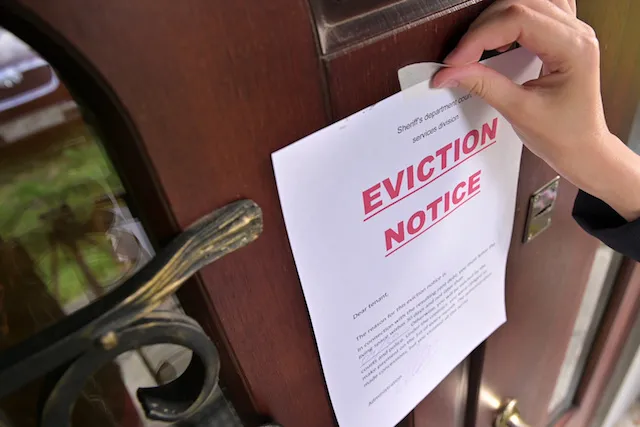
Illinois Eviction Moratorium Extended through October 2021
The office of Illinois Governor J.B. Pritzker announced that the statewide eviction moratorium would be re-issued and extended through October 3, 2021. The governor's office also clarified in the latest announcement that the amended version of Executive Order 2021-13, which many renters and landlords throughout the state refer to as the Illinois eviction moratorium for shorthand, will be rescinded after October 3, 2021, allowing both eviction actions to proceed and enforcement of court orders to be enforced.
According to the order, "All state, county, and local law enforcement officers in the State of Illinois are instructed to cease enforcement of orders of eviction for residential premises entered against a Covered Person or Non-Covered Person unless that person has been found to pose a direct threat to the health and safety of other tenants or an immediate and severe risk to the property." This section of the order is in effect until the new deadline of October 3, 2021. For more information on what constitutes Covered persons under the moratorium, continue reading below or refer to Executive Order 2021-19.
The governor's office once again cited the continuing spread of COVID-19 case numbers in Illinois in Executive Order 2021-23, which extends the deadline of the eviction moratorium and several other recent orders.
Previously, Governor Pritzker's office announced significant changes to the statewide ban on evictions at the end of June 2021. Probably the most significant change announced by the governor's office was a deadline for Section 3 of the Executive Order, which prohibited landlords from pursuing eviction actions against persons who weren't covered under the moratorium (a/k/a Non-Covered Person) "who does not owe rent unless that person poses a direct threat to the health and safety of other tenants or an immediate and severe risk to the property." This provision was rescinded after June 25, 2021, according to Executive Order 2021-13.
Significant changes announced in November of 2020 included more narrow definitions of Covered Persons under the moratorium on evictions. According to those definitions, a Covered Person was one who meets all four of the following requirements: "(1) the individual either (i) expects to earn no more than $99,000 in annual income for Calendar Year 2020 (or no more than $198,000 if filing a joint tax return), (ii) was not required to report any income in 2019 to the U.S. Internal Revenue Service, or (iii) received an Economic Impact Payment pursuant to Section 2001 of the CARES Act;" and is (2) "unable to make a full rent or housing payment due to a COVID-19 related hardship including, but not limited to, substantial loss of income, loss of compensable hours of work or wages, or an increase in out-of-pocket expenses directly related to the COVID-19 pandemic;" (3) "the individual is using best efforts to make timely partial payments that are as close to the full payment as the individual’s circumstances may permit, taking into account other Non-Discretionary Expenses;" and (4) eviction would likely render the individual homeless . . .".
Landlords must allow tenants to demonstrate that they meet this four-part test. Specifically, landlords must provide a written declaration form to the resident or tenant at least five days before the notice of termination of tenancy. Suppose the tenant can establish that he/she/they meet all four requirements of the Covered Person test. In that case, the eviction case will fail unless the "person poses a direct threat to the health and safety of other tenants or an immediate and severe risk to the property."
This latest executive order from the governor's office also includes a pivotal amendment to the previous executive order (Executive Order 2021-13), which deals with residential evictions in Illinois. That amendment reads: "Nothing in this Executive Order shall preclude a person or entity with a legal right to pursue an eviction or possessory action from challenging the truthfulness of a tenant’s, lessee’s, sub-lessees, or resident’s Declaration in court, as permitted by law and the applicable Court’s rules."
The executive orders explain that evictions necessitate in-person interactions between residents, law enforcement, movers, and the family or friends that take the evicted renters into their homes. The continued pause on residential evictions is intended to avoid those in-person interactions and, in doing so, slow the spread of the virus.
CDC Eviction Moratorium Struck Down by Supreme Court
The Supreme Court released an opinion on Thursday, August 26, 2021, where the majority of justices on the Court agreed that ordering a nationwide moratorium on evictions was not within the authority of the Centers for Disease Control (the "CDC"). THE FEDERAL AGENCY ANNOUNCED the CDC order only weeks earlier (on August 3, 2021), and the order called for "temporarily halting evictions for persons in counties experiencing substantial or high rates of transmission" of COVID-19. According to the CDC, the order was set to expire on October 3, 2021, but its rescission via the Supreme Court's decision brings a premature end to the national eviction ban.
The order as written "[did] not apply in any state, local, territorial, or tribal area with a moratorium on residential evictions that provides the same or greater level of public-health protection than the requirements listed" within the CDC's order. As a reminder, Illinois Governor J.B. Pritzker announced an extension of the Illinois Eviction Moratorium until September 18, 2021.
The CDC's original nationwide eviction moratorium was issued on September 4, 2020. This initial order has been extended multiple times and expired on July 31, 2021. The new CDC eviction moratorium aims at mitigating the community spread of highly contagious Delta variant by preventing people from losing their housing and sharing dwellings such as through homeless shelters or temporarily staying with relatives. The Delta variant has led to a five-fold increase in case counts of COVID-19 across the United States in July of 2021.
Rental relief funds totaling $25 billion were made available to local governments in February 2021 with the last extension of the CDC's original eviction moratorium. Portions of those funds are currently being disbursed in Illinois as part of the state's Emergency Rental Assistance Program.
As of August 2021, The Illinois Housing Development Authority claims on its website to have paid over $187 million in rental assistance grants to both tenants and landlords in Illinois.
When Will Evictions Resume in Illinois?
The Illinois eviction moratorium allows for the filing of residential eviction actions as of June 25, 2021, according to Executive Order 2021-13. However, according to the most recent extension of the moratorium from Governor J.B. Pritzker’s office, enforcement of judgments of residential evictions will be postponed until after October 3, 2021.
It also clarifies that it does not extend to circumstances where “the tenant has been found to pose a direct threat to the health and safety of other tenants, an immediate and severe risk to property, or a violation of any applicable building code, health ordinance, or similar regulation.” In other words, the temporary eviction ban is designed to protect only those tenants who would be evicted due to nonpayment of rent, as opposed to other lease violations. Some landlords grumble that the eviction moratorium encourages renters to skip their rent payments -- but nothing in the moratorium forgives a tenant's obligation to pay the rent. It merely provides renters with stable housing until the moratorium elapses.
Eviction Moratorium Chicago Protection Ordinance Provides Additional Protections to Renters
Chicago City Council approved a COVID-19 Eviction Protection Ordinance in June 2020. This ordinance requires that landlords extend a seven-day "cooling off" period if tenants respond to the five-day notice with a Tenant Notice and can prove unpaid rent stems from financial losses caused by the Coronavirus pandemic.
The Ordinance purports to prevent conditions leading to a loss of shelter, even as it protects landlords by requiring tenants to pay rent and providing exceptions to the general rule. For example, landlords may file eviction proceedings if “a tenant poses a direct threat to the health and safety of other tenants, an immediate and severe risk to property, or a violation of any applicable building code, health ordinance, or similar regulation.”
If landlords are thinking about performing a DIY eviction, here’s the deal: don’t do it. Lockouts are illegal in Chicago apartments. Chicago’s landlord-tenant law also heavily favors tenants in cases of retaliatory conduct. Landlords may end up in legal trouble if they even hint that they’re willing to circumvent the legal eviction process and eviction moratorium. Expensive fines and legal fees await landlords who attempt to perform self-help evictions in Chicago.
Disclaimer: Domu provides this page as general information to the Chicago landlord-tenant community. Domu is not a law firm. Domu is not offering legal advice here or anywhere on Domu.com.