chicago apartments

Blog

apartment projects under construction: update

last october, we reported on the progress of seven high-rise apartment buildings under construction in downtown chicago.  at the time we issued that report, the shiny new lexington park high-rise condominium project was just that: a condominium project.  but now it's going rental, which means the numbers have changed.  this year and next, eight new towers will add nearly 3,150 apartment units to the market.  the census folks say chicago is shrinking, but it sure doesn't feel that way to us here at domu, particularly considering that so many other apartment developments are queued up and fixin’ to move forward.

in addition to the eight projects coming soon, site preparation is now underway for two new apartment towers (360 west hubbard and 200 east illinois), while still two others appear to be in the final stages of planning and approval (73 east lake and 410 east grand). then there’s three more that have been credibly proposed, but which remain a long way away. (many other projects have been bandied about, but none of these seem, at least to us, either credible or imminent enough to merit discussion at this point.)

so here’s our peek at what’s in the pipeline for chicago renters.

completed and nearly ready for renters

  • 2138 south indiana avenue. originally built as a condominium, ownership of the building changed hands, pending contracts were canceled, and conversion to rental is nearly complete with leasing expected to commence in mid-april.  the 35-story tower contains 333 apartment units.

already under construction

  • 1225 north wells street. construction has “topped out” at this 16-story, 250-unit apartment building on the near north side, and leasing is expected to commence in september 2012.
  • 188 west randolph street. the apartments on the lower floors of this gutted and rehabbed 313-unit, 45-story skyscraper in the heart of the loop (named “randolph tower”) will reportedly be ready for occupancy by april 2012.
  • 840 west blackhawk street. this 22-story, 324-unit apartment tower on the near north side (named “sono”) is nearing completion and leasing is slated to commence in june 2012.
  • 345 east wacker drive. this 49-story, 499-unit apartment tower in lakeshore east (named “coast” as part of the developer’s continuing obsession with nautical themes) is now several stories out of the ground, and leasing is projected to commence in february 2013.
  • 500 north lake shore drive. this 45-story, 500 unit apartment building in south streeterville near navy pier is now several stories out of the ground, and leasing is slated to commence in may 2013.
  • 365 north halsted street. this 33-story, 496-unit apartment tower (named “k2” as part of the digital age obsession with alphanumeric character blends) is now peeking out of the ground in the fulton river district and preparing its vertical ascent. completion is targeted for 2013.
  • 71 west hubbard street. construction of this 50-story, 407-unit apartment tower in the heart of river north is reportedly underway, although none of the heavy construction equipment appears to be out yet.

site preparation underway

  • 360 west hubbard. the habitat company has begun site preparation at the massive surface parking lot across the street from the east bank club. the plans call for a 43-story tower with 450 apartment units adjacent to an eight-story parking garage topped with swimming pool. other building amenities will include a fitness room, a yoga studio, a club room, a media room, a conference room, a kitchen/bar area, a multi-purpose room, a lounge, a steam room, a sauna, and a whirlpool.
  • 200 east illinois. site preparation is underway at the northwest corner of st. clair and illinois streets, and the project in the works -- a sleek, 42-story, glass tower designed by local architect david hovey will contain 325 apartment units above nine floors of parking and 20,000 square feet of commercial space.

so close you can taste it

  • 73 east lake street. the approval process is underway for the construction of a 42 story, 332 unit apartment tower at the southeast corner of wabash and lake streets at the northeastern edge of the loop. the developers are planning ground floor retail with parking on floors 2 through 8. if and when this project gets off the ground, the new building be a welcome upgrade to a particularly unsightly corner of the city.
  • 410 east grand avenue. revised plans for a 45-story, 490-unit apartment tower at the southeast corner of mcclurg court and grand avenue were recently unveiled at a community meeting in streeterville, and the neighborhood was surprisingly warm to the proposal. we expect this surface parking lot to meet its maker sometime soon.

proposed, but still a long way off

  • 1 south halsted street. six months ago, a stunning, elliptical, 48-story, 514-unit apartment tower was being proposed for the west loop between greektown and the expressway. a prominent local community organization was supporting the project, but, since then, there’s been nary a peep in the local press. the developer was anticipating a two-year approval process to be followed by a two-year construction timeline, so, assuming everything remains on track, new apartments probably won’t be delivered until at least 2014.
  • columbus & north water streets. a 50-story tower with apartment units above and hotel units below has been proposed for the southern half of the massive undeveloped parcel at illinois and columbus streets between the embassy suites and sheraton hotels in south streeterville. the proposed project remains in the early stages, and ground-breaking is not expected any time soon.
  • 111 west wacker drive. before the real estate market came crashing down, waterview tower was 26 floors out of the ground and heading for the top tier of chicago the skyline. had everything gone as planned, it would have been a shangri-la hotel today with hundreds of new condominium units to boot. but we all know what they say about the best laid plans of mice and men, so once the dust settled it was a cold concrete shell, competing for the title of chicago’s biggest eyesore. it was recently acquired by related midwest, which now plans a 53-story rental building with 500 apartment units.

the whole ball of wax

building location building name stories units completion date
2138 s indiana lexington park 35 333 april 2012
188 w randolph randolph tower 45 313 april 2012
1225 n wells   16 250 september 2012
840 w blackhawk sono east 22 324 june 2012
345 e wacker coast 49 499 february 2013
500 n lakeshore   49 500 may 2013
365 n halsted k2 33 496 2013
71 w hubbard amli river north 50 409 2013
360 w hubbard habitat tower 43 450 fall 2013
200 east illinois optima city center 42 332 spring 2014
      3906  
Tags:

presenting: chicago’s vintage restaurants

a tenant doesn't just lease an apartment.  a tenant leases a neighborhood.  so here at domu we try our best to educate our chicago tenants about the neighborhoods in which they live.  that's why we created the chicago history map.  pound for pound, we think the chicago history map is the most original and addicting presentation of chicago history in all of cyberspace. (full disclosure: we think everything about domu is great.)

so, anyway, in observance of chicago restaurant week 2012, we've decided to unveil a new history map category honoring the city’s “vintage restaurants.” a vintage restaurant, as we loosely define it, is any restaurant that’s been open for more than half a century. we figure if you can keep it going for 50 years you must be doing something right, even if, as in the case of jimmy’s red hots (founded 1954), the entire menu consists of a polish sausage, a hot dog, a tamale, french fries, and soda.

so have a look. there are 58 vintage restaurants on the map, including nine pizzerias, eight diners, and seven hot dog joints. a list of these classic eateries, in age order, appears below. trivia buffs will be glad to learn that the five oldest restaurants in chicago are schaller’s pump (1881), daley’s restaurant (1892), the berghoff (1898), the walnut room (1907), and cafe brauer (1908). these are the only restaurants in town where someone could have celebrated the final out of a chicago cubs world series championship. the oldest italian restaurant in the city is italian village (1927). the oldest chinese restaurant is orange garden (1924), which is actually on irving park road and not in chinatown. the oldest restaurant in chinatown is won kow (1927), which was a favorite dining spot for the notorious al capone.

in cooking up our list, we might have decided that a restaurant inherently requires table service, but that would have eliminated the swedish bakery, which has been selling assorted scandanavian treats from the same andersonville location since at least 1929 (and perhaps earlier). it would also have 86’d the legendary calumet fisheries, which has been producing delicious oak-smoked seafood since 1948 and was recently recognized as an american classic by the james beard foundation.

we might also have decided that a restaurant necessarily serves something other than flavored sugar water, but that would have eliminated mario’s italian lemonade, the exclusive source of drinkable italian ice on taylor street every summer since 1954.

we also imposed no requirement that a vintage restaurant still be operating from the same location in which it first opened, probably because we didn’t have the heart to omit such jewels as lou mitchell’s, which opened in 1923, but moved across the street in 1949, or manny’s, which opened in 1942, but moved a few times before settling into its current digs in 1964. we also waived any requirement that the restaurant be open for at least 50 consecutive years, mainly because we couldn’t imagine the map being complete without cafe brauer, which opened in lincoln park in 1908, closed in 1941, then reopened again in 1990.

is our list exhaustive? we doubt it. it’s probably safe to assume that there have been some unintentional omissions. so, if you know of one, please bring it to our attention. we’ll add it to the history map, lickety-split. until then, bon appetit!

1 1881 Schaller's Pump
2 1892 Daley's Restaurant
3 1898 The Berghoff
4 1907 The Walnut Room
5 1908 Cafe Brauer
6 1909 Pompei Bakery
7 1921 Margie's Candies
8 1921 Valois
9 1921 The Green Door Tavern
10 1923 Lou Mitchell's
11 1924 Lindy's Chili
12 1924 Orange Garden
13 1925 Erickson's Deli
14 1927 Won Kow
15 1927 Italian Village
16 1928 Swedish Bakery
17 1931 Tufano's Vernon Park Tap
18 1932 Twin Anchors
19 1933 Bertucci's Restaurant & Lounge
20 1933 Bruna's
21 1933 The Cape Cod Room
22 1934 The Billy Goat Tavern
23 1937 The Diner Grill
24 1938 Al's No. 1 Italian Beef
25 1938 Frances' Deli
26 1938 The Pump Room
27 1939 Blackie's Restaurant & Tavern
28 1939 White Palace Grill
29 1939 Jim's Original
30 1940 Marie's Pizza & Liquors
31 1941 Gene & Georgetti
32 1942 Manny's
33 1943 Uno Chicago Grill
34 1945 Ann Sather's
35 1946 Coletti's
36 1947 Marcello's (Father & Son)
37 1947 Home Run Inn
38 1947 Veteran Tamale Shop
39 1948 The Woodlawn Tap (Jimmy's)
40 1948 Superdawg
41 1948 Calumet Fisheries
42 1950 The Bagel
43 1950 Podhalanka Polska
44 1952 Club Lago
45 1954 Jimmy's Red Hots
46 1954 Mario's Italian Lemonade
47 1955 Pizzeria Due
48 1955 Johnny's Wee Nee Wagon
49 1959 Moody's Pub
50 1959 Mickey's Drive-In
51 1959 Aurelio's Pizza Of Homewood
52 1960 Morry's Deli
53 1961 Palermo's
54 1961 Susie's Drive-In
55 1961 Butch McGuire's
56 1962 Monastero's Ristorante
57 1962 Stella's Diner
58 1962 Medici 57

when to start your apartment search

one of the most common questions we field here at domu is: “when should i start my search for a new apartment?”  the way we see it, the answer to that inquiry depends on two things: the law (which is static) and the market (which is fluid).

chicago’s notorious residential landlord tenant ordinance prohibits a landlord from requiring a tenant to renew a lease more than 90 days prior to its scheduled termination.  the ordinance also allows a tenant to refuse his landlord access to the apartment for the purpose of exhibiting it to prospective renters more than 60 days before the expiration of the lease.  while this technically still allows the landlord to show the property to interested renters with the tenant’s consent, in practice most landlords play it safe and refrain from showing an apartment more than 60 days before it becomes (or is scheduled to become) available.  the ordinance also requires a landlord to provide at least 30 days written notice of its intention either to terminate a month-to-month tenancy or not to renew an existing lease.  in other words, even if the lease naturally expires on august 31, if the landlord fails to notify the tenant, by august 1, of its intention not to renew that lease, the tenant may continue to occupy the apartment on a month-to-month basis.

so what’s the upshot of all this?  well, in simple terms, it means that the landlord may require the tenant to commit to a renewal within 90 days prior to the termination of the lease.  it also means that the landlord effectively can’t show the apartment to prospective new renters until 60 days prior to the termination of the lease.  and it means that the landlord must give the tenant at least 30 days notice of its intention to hike the rent (or to not renew).  generally speaking, landlords hew fairly tightly to these rules.  typically, they will send a letter setting (or, in today’s market, hiking) the rent about three months before lease expiration and asking the tenant to commit within 30 days.  at the end of that 30-day period, all bets are off, and the landlord will start showing the apartment to prospective renters.  if a new renter signs a lease, the landlord will promptly notify the tenant to ensure that the tenant is aware, at least 30 days prior to termination, that he needs to find new living quarters.

now, having laid the legal groundwork, the question is when to start apartment hunting, given current market conditions.  for insight on this, we polled a couple of our trusty management company clients.  first we consulted benjamin ring of lakeview associates,  a firm that manages about 1,000 units in 21 mid-rise, vintage, and courtyard buildings, primarily in east lakeview and lincoln park.  benjamin suggests that, in a typical year, tenants should begin their apartment search at the beginning of the 60-day timeframe because his own management company does not, as a matter of policy, show apartments to prospective renters until the commencement of that 60-day period.  he predicts, however, that 2012 will be strong for landlords and counsels that tenants should start “sooner rather than later” in today’s market.  translation: start 60 days before your desired move-in date, and do not procrastinate!

next we contacted lauren schramka at zrs management, which manages chestnut tower, a picturesque high-rise at the southeast corner of lasalle and chestnut streets.  lauren, who naturally views the world from the landlord’s perspective, forecasts an even tighter supply of inventory than ben.  she indicates that chestnut tower has no vacancies and a growing waiting list.  having enjoyed this same luxury last summer, they rented all of their available units to waitlist applicants before the general public even knew (and they never did) that there were apartments available.  as a result, lauren advises tenants in today’s market to start their apartment search at least 90 days before their desired move-in date.  naturally, there will be management companies like lakeview associates who won’t even provide tours until 60 days out, but it obviously won’t hurt to get a head start. 

Tags:

in chicago, there’s no such thing as a “roommate” (a cautionary tale)


anyone who’s taken a gander at our resource guides can tell you that apartment renting is a risky business in this town, thanks to the notorious residential landlord tenant ordinance.  typically it’s the part-time landlords who end up in hot water, although tenants can get themselves into a heap of trouble too.  so today we examine the unfortunate case of the tenant who got taken to the cleaners by his roommate.

actually, from a legal perspective, there’s no such thing as a “roommate.”  anyone who lives in a dwelling unit is either an owner, a landlord, a tenant, a sublessor, or a sublessee.   each of these persons has defined rights and duties under the ordinance, which cannot be evaded merely by classifying someone as a “roommate.”

with that in mind, we relate the following story, which we ourselves witnessed in open court at the daley center.  being magnanimous, however, we are sparing the litigants from public embarrassment by assigning them fictitious names.

it all started with daniel, a graduate student at a local university.  daniel was renting a two-bedroom apartment in a gold coast brownstone with one of his classmates.  the two of them signed the lease as co-tenants and lived there for a year without incident.  at the end of the term, daniel’s roommate moved out.  but daniel liked the location and wanted to stay put for another year.  so he signed a new lease as the sole tenant and put down a new security deposit, then privately resolved to find a new roommate to help defray his costs.  about three months into the lease he met peter, an old friend from the suburbs who wanted to move downtown.  daniel convinced peter to move in with him until he found his own place.  peter never signed the lease between daniel and the landlord, and daniel never informed the landlord of peter’s existence.  the whole thing was very informal.  peter agreed to pay daniel (not the landlord) half the rent for each month he remained there, and he also wrote daniel a check for one-half the security deposit.  daniel never sent the security deposit to the landlord.  instead, he deposited the funds in his own bank account.

about three months after he moved in, peter found a place in streeterville.  he was so anxious to settle into his new digs that he moved out of daniel’s place even though he’d already prepaid for a few weeks when he would no longer be there.  he then asked daniel to refund his security deposit, but daniel was upset that peter gave him only a few weeks’ notice of his departure, so he retained the money.  this enraged peter, who had no formal lease and no formal “notice” provision. peter enlisted an astute lawyer friend to send daniel a “nasty-gram.”  daniel refused to budge, and a lawsuit ensued.

peter filed an action against daniel for violating the residential landlord tenant ordinance by failing to provide his “subtenant” with the required disclosure forms, failing to provide his “subtenant” with a proper security deposit receipt, improperly commingling the security deposit, and failing to refund the security deposit within 45 days.  in his prayer for relief (it’s not an actual “prayer,” it’s more of a request), peter sought the entire smorgasbord of statutory damages, including two times the security deposit, plus interest, court costs, and attorneys’ fees.

at trial, daniel’s attorney argued that the residential landlord tenant ordinance does not apply to “roommates,” but the argument held no sway with the judge, who interpreted the statute exactly as written.  this was how she reasoned:

  • the apartment was not “owner-occupied” because the actual owner was a guy who lived in the suburbs.  therefore, the unit in question was not exempt from the municipal ordinance.  (section 5-12-020.)
  • peter was not a party to the lease between daniel and the landlord, and the lease was never amended to include him.
  • peter paid his rent money directly to daniel, and daniel paid the owner.
  • peter gave daniel a security deposit, and daniel never forwarded those funds to the owner.
  • the ordinance defines a “landlord” as an “owner, agent, lessor or sublessor, or the successor in interest of any of them.”  (section 5-12-030.)
  • by collecting rent from peter, rather than placing peter in direct privity with the owner by adding him as a signatory to the lease, daniel acted as a sublessor, and peter became his sublessee (or subtenant).
  • whether they called themselves “roommates” or could be characterized as “roommates” was utterly irrelevant, and, for legal purposes, daniel was a sublessor and peter was a subtenant.
  • because the ordinance defines a landlord to include any person who serves as a sublessor, daniel was required to follow all the requirements of the residential landlord tenant ordinance.

needless to say, things ended badly for daniel, who was just a regular guy doing a favor for an old friend by inviting him to become a “roommate.”  but, as we have by now hopefully made crystal clear, there is no such thing as a “roommate” under chicago law.  a roommate is a either a tenant or a subtenant.  and, so, ladies and gentlemen of the chicago apartment community, the moral of the story is that anytime you provide a “dwelling unit” in exchange for payment you are going into the apartment-renting business and incurring a risk of substantial liability if you fail to follow the provisions of the chicago residential landlord tenant ordinance.

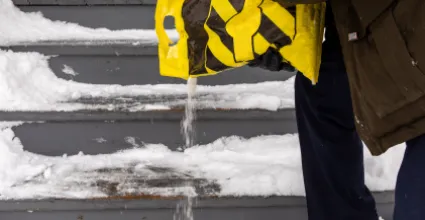
snow removal in chicago, who's responsible?


according to the centers for disease control, about 600,000 americans are hospitalized each year from slip-and-fall injuries.  (not merely treated, but actually admitted.)  the elderly are disproportionately affected, and the outcomes often range from the breaking of one’s bones to the meeting of one’s maker.  famed dietician joseph atkins is a notable example, having died from severe head trauma after slipping on some icy pavement.  so naturally the city of chicago is deadly serious about making sure the sidewalks get shoveled.

and that’s where you come into play.  the city doesn’t have the manpower to shovel the sidewalks, so a municipal ordinance requires residents to do it themselves.  that’s right!  anyone in charge of managing a commercial or residential property adjacent to a public way is required to shovel the ice and snow off the sidewalks at the risk of being slapped with a fine.  the ordinance contains lots of rules about shoveling, and the city of chicago has published an accompanying set of guidelines, but here’s the executive summary:

  • snow or ice that accumulates before 4:00 p.m. must be removed within three hours.
  • snow or ice that accumulates after 4:00 p.m. must be shoveled by no later than 10:00 a.m. the following day.
  • snow or ice that is so frozen that it cannot be removed without damaging the pavement must be treated with rock salt or a similar substance.
  • if the sidewalk is huge, you need only clear a path five feet wide.
  • do not shovel ice or snow onto streets, crosswalks, or alleys, and do not bury the fire hydrants.
  • no matter what, you never have to do anything on sunday.
  • if you’re concerned about someone else’s failure to shovel, report the address to “311” or file an “online snow removal request” with the city of chicago.

better yet, to encourage civic compliance, the city allows the general public to nominate businesses and organizations for a “winter wonder award” if they “do an excellent job of clearing their sidewalks of snow and ice.”  winning businesses receive a letter of recognition and special mention on the chicago department of transportation website.   we at domu are very conscientious of our own shoveling obligations and boldly predict that no pedestrian will ever take a spill on the sidewalk outside our office.  that’s why we’d like to encourage the entire chicago landlord and tenant community to nominate us for a “winter wonder award.”

in the meantime, for those hungry for even more information about this riveting topic, our crack staff has now assembled the definitive “chicago guide to snow removal and slip-and-fall liability,” which we offer free of charge to the local apartment rental community.  this guide tells you everything you need to know about your snow shoveling obligations under the municipal ordinance and, as an added benefit, analyzes the state of illinois law with regard to liability for slip-and-fall injuries that occur during inclement winter weather.  please feel free to download a copy and educate yourself.  we think there’s a ton of stuff you’ll be glad to know.

for your convenience, the contents of our snow removal guide are printed below.

every winter, an epidemic of slipping and falling strikes chicago, wreaking havoc on local emergency rooms and even, on occasion, generating extra business for local funeral homes.. pedestrians break bones, tear ligaments, and even pay the ultimate price just for living in a winter wonderland.  distill down the seasonal batch of slip and fall injuries and you end up with a hearty collection of lawsuits.  many of these lawsuits get tossed out of court due to a decades-old illinois law that protects property owners from liability for injuries caused by natural precipitation.  still, lawsuits are frustrating, time-consuming, and expensive even for the victors.

so, in our continuing effort to assist the chicago landlord and tenant community, we present this guide to understanding your rights, duties, privileges, and immunities during times of inclement winter weather.  in the first section, we explain the shoveling obligations imposed by chicago municipal ordinance.  in the second, we provide an overview of illinois law regarding the liability of property owners to pedestrians who slip and fall on ice and snow.

i.

the city of chicago requires property owners to shovel ice and snow off the public sidewalks.

just because you don’t actually own the sidewalk in front of your business or residence doesn’t mean you can let the ice and snow accumulate while you sip hot chocolate by the fire and do nothing.  the city of chicago actually requires you to get off your duff and shovel the sidewalk -- or to pay someone else to do it for you.  and if you don’t do it, you can be fined.  although our erstwhile mayor daley once admitted that the city does not enforce the snow shoveling law, one north side alderman recently suggested that city employees photograph unshoveled sidewalks so tickets could be issued to offending property owners.

typically, the first question anyone who lives in an apartment asks is: “who gets fined if the sidewalks don’t get shoveled?”  to answer that, we turn to the actual language of the city ordinance, which imposes the obligation upon every “owner, lessee, tenant, occupant or other person having charge of any building or lot of ground in the city abutting upon any public way or public place.”  we do not profess to be lawyers here at domu, though we respectfully suggest that the operative phrase is “or other person having charge of any building or lot of ground.”  there’s no case law on this (we checked), but we’d venture to guess that you can’t be guilty of violating the ordinance unless you are actually the person “in charge of” the building.  in other words, just being a “lessee,” “tenant,” or “occupant” is not enough.  you need to be the building owner or management company, unless your lease expressly assigns you responsibility for shoveling the sidewalk.  if you sign any sort of document specifically tasking you with shoveling the sidewalk in front of the premises you’re renting, you are almost certainly the person “in charge” for statutory purposes.

the second question most people ask is: “what if i shoveled the whole damn sidewalk and six more inches fell while i was inside icing my sore back?”  thankfully, the city council accounted for the scourge of lengthy precipitation by including some additional language in the statute.  here’s how it works:

  • any snow or ice that accumulates before 4:00 p.m. must be removed within three hours.
  • any snow or ice that accumulates after 4:00 p.m. must be shoveled by no later than ten o’clock the following morning.
  • no matter what, nobody ever has to work on sunday.

in other words, you don’t need to spend the whole day at home, constantly shoveling the sidewalk in a sisyphisian frenzy.   just make sure that by no later than 7:00 p.m. you’ve shoveled away all the snow that accumulated before 4:00 p.m.  as we see it, that means you can either stop shoveling at 4:00 p.m. and call it a day (great for management companies whose employees have to go home and shovel their own sidewalks) or you can shovel, by no later than 7:00 p.m., however much snow fell by 4:00 p.m. (better for individual homeowners).  any snow that falls after 4:00 p.m. can be dealt with the following morning by ten o’clock, unless it’s sunday.  everyone gets the day off on sunday.

but wait.  there’s more.  if the sidewalk is greater than five feet in width, the city only requires removal of enough snow or ice to create a path five feet wide.  if the snow or ice is frozen so hard that it cannot be removed without damaging the pavement, then the person “having charge” of the property must ensure that the sidewalk is “strewn with ashes, sand, sawdust, or some similar suitable material.”  (we at domu recommend rock salt.)  the city strongly recommends that snow or ice not be shoveled into streets, crosswalks, or alleys or on top of fire hydrants.

and that brings us to the third question commonly asked: “what’s the penalty for not shoveling?”  for a resident, the answer is “not much.”  any person “having charge” of the property who fails to shovel the snow and ice in timely fashion may be subject to a $50.00 fine, and any licensed chicago business that fails to shovel as required by the ordinance may be subject to fines ranging from $250 to $500 per day.  on the other hand, anyone who faithfully discharges his shoveling obligations is granted immunity from any lawsuit filed by someone who slips and falls in a shoveled area and then attempts to claim that the injury was actually caused by faulty or negligent shoveling.  (as we shall soon see, hundreds and perhaps thousands of lawsuits have been filed in illinois by people claiming they were injured by “unnatural accumulations” of snow or ice caused by the shoveling of sidewalks and driveways.)  the immunity granted by the ordinance, however, does not apply if the person who shoveled the snow is shown to have engaged in willful misconduct.

to encourage compliance with the ordinance and promote as much shoveling as possible, the city of chicago encourages concerned citizens to do any or all of the following things:

  • call “311” to report any stretches of the public way that have not been properly or timely shoveled.
  • file an “online snow removal request.”
  • print special “door-hangers” and affix them to the front of any building at which ice or snow has been permitted to accumulate.

the city also allows the general public to nominate businesses and organizations for a “winter wonder award” if they “do an excellent job of clearing their sidewalks of snow and ice.”  winning businesses receive a letter of recognition and special mention on the chicago department of transportation website.   we at domuare very conscientious of our own shoveling obligations and boldly predict that no pedestrian will ever take a spill on the sidewalk outside our office.  that’s why we’d like to encourage the entire chicago landlord and tenant community to nominate us for a “winter wonder award.”

ii.

people still fall, people still sue.  so how do you protect yourself?

in july 2010, the illinois supreme court reaffirmed the decades-old “natural accumulation rule,” under which owners cannot be held liable for slips and falls resulting from natural accumulations of ice or snow on their property.  (we’re not just talking about the public sidewalks now.  we’re talking about private property too.)  for years, illinois courts have consistently dismissed cases brought by (or on behalf of) dead and wounded civilians seeking recourse after they slipped and fell on a “natural accumulation” of ice or snow.  under illinois law, it has never mattered not one whit whether the property owner had a reasonable amount of time to act, nor how long the ice and snow remained on the ground before the injury.  property owners have no affirmative obligation to shovel their property, absent a contractual obligation to do so.  if a pedestrian should slip and fall because nobody ever shoveled, the pedestrian is, as they say, s.o.l.

so here’s why no good deed goes unpunished:  if a property owner actually goes out and shovels, but someone slips and falls anyway, the property owner can then be sued for creating an “unnatural accumulation” of snow, for aggravating an existing condition, or even for shoveling negligently.  in an ostensible effort to address this quirk in the law, illinois created the snow and ice removal act, 745 ilcs 75/1 (the “act”).  under the act, owners, occupants, lessees, and managers of residential properties who shovel away ice and snow off the sidewalks are granted immunity from legal liability for slip and fall accidents, even in cases involving allegations of an “unnatural accumulation” or negligent performance of snow removal.  owners and managers of residential properties can be held liable only if the plaintiff can prove that they deliberately caused injury (or that the injury did not occur on a sidewalk).  business owners, however, do not enjoy any immunity under this act.

so basically there are three ways an injured person can recover for a slip-and-fall caused by snow or ice:

  • a residential or commercial property owner or tenant was contractually required (for example, by lease or condominium declaration) to shovel away ice and snow, but failed to reasonably comply with that obligation.
  • a non-residential property owner actually shoveled away ice or snow, but created an “unnatural accumulation,” aggravated a natural condition, or performed the work negligently.
  • any property owner, lessee, occupant, or manager engaged in clear wrongdoing, deliberately causing an injury while shoveling ice or snow.

in the paragraphs below, we’ll take a closer look at cases brought by persons who have sought to impose liability on property owners and managers in each of these contexts.

assumption of snow removal obligations in leases & condominium declarations

a property owner, management company, or even third-party contractor may have a contractual obligation to shovel snow based on a lease, condominium declaration, or similar legal instrument, or as the result of an annual maintenance contract entered into with a property owner or manager.  in these circumstances, courts have allowed slip and fall cases to proceed if the responsible party negligently failed to perform its snow removal obligations.  for example, in december 1977 joanne tressler slipped while walking to her mailbox and fractured her arm.  a few years earlier, her landlord had provided her a handbook stating that the landlord would arrange for snow removal.  having found that the landlord negligently failed to perform this duty, the court allowed ms. tressler to take her case to a jury.  incidentally, once a landlord or association assumes the obligation of snow removal, the duty runs even to persons who are not residents at the development in question.  thus, barbara schoondyke was able to sue the association where her parents owned a condominium after she slipped on the interior sidewalk on a snowy evening in february 1974.

creation of an unnatural accumulation of ice or snow

though property owners have no duty to remove natural accumulations of ice and  snow, they may still be held liable if, as a result of shoveling, they either caused an “unnatural accumulation” of ice or snow, aggravated a natural condition, or performed the work negligently, thus causing injury.  naturally, every half-wit plaintiff’s lawyer attempts characterize his client’s injury as having resulted from one of these causes.

most cases alleging an “unnatural accumulation” are unsuccessful

most cases alleging that a slip and fall injury was caused by an “unnatural accumulation” of ice or snow are weeded out of the legal system before they ever reach trial because courts, perhaps sensitive to the danger posed by the loopholes in the “natural accumulation” rule, repeatedly emphasize that an “unnatural accumulation” of snow is something other than a natural accumulation that was altered in some fashion by human hands.  for example:

  • mary lee lewis slipped as she walked down the stairs in front of her house one afternoon in december 1972 (prior to the snow and ice removal act) and endured more than a year of treatment before finally going under the knife to fix her damaged knee.  she claimed that the building janitor aggravated a natural condition (snow and ice on the stairs) by throwing salt in the area.  the salt (or so she claimed) caused the ice to melt and then refreeze in a way that wouldn’t have happened if the janitor had never done anything at all.  the court disagreed that the mere spreading of salt can give rise to liability and knocked out her primary theory of recovery.  (fortunately for mary, the court permitted the case to proceed under a second theory that the landlord negligently failed to install handrails in accordance with municipal code).
  • similarly, in january 1977 helen erasmus slipped on the sidewalk outside her townhome near comiskey park (as it was then known) and sued the chicago housing authority.  her gripe was that the authority dutifully shoveled away a thick layer of snow, but left about two inches of solid ice intact.  she argued that once the authority set about to remove the snow, it should have removed the ice along with it.  the court disagreed.  (this case, too, was decided before the snow and ice removal act.)
  • in january 1990 tom watson (not the famed golfer) stepped on a patch of ice as he exited the j.c. penney store in downstate illinois.  seconds later, he was writhing on the ground in pain with a freshly broken collarbone.  naturally, he filed a lawsuit.  at his deposition, he claimed to have slipped on ice formed from wet human footprints left b`y customers entering the store.  not unexpectedly, the court tossed out the case, ruling that icy footprints created in the wake of snow shoveling do not amount to an “unnatural accumulation.”  (this case post-dated the act, but the act would not have applied anyway because j.c. penney was not a residential property.)

incidentally, the “natural accumulation” rule also applies to rain water, as chicagoan helen lohan would reluctantly concede.  in october 1978, ms. lohan slipped on a wet floor just inside the vestibule of a dominick’s finer foods at 87th and cicero, but was unable to prove that the water was anything other than the natural product of foot traffic during a “nice downpour.”  the court reaffirmed that dominick’s could not have been held responsible even if it was aware that the area was wet.  likewise, on a snowy february afternoon in february 1991, carolyn stypinski decided to cut through what’s now known as the chase bank building on monroe.  the marble floors were wet from foot traffic, and she promptly toppled over, fracturing a hearty collection of bones in her ankle.  she sued, but her claims were tossed out of court.

a small number of cases successfully allege an “unnatural accumulation” of snow or the negligent performance of an obligation to shovel

so just what does a plaintiff have to do to succeed on an “unnatural accumulation” or negligent shoveling claim?  in the former case, he needs to demonstrate that the presence of some other defective condition aggravated the forces of nature.  for example:

  • in january 1976 lenora lapidus permanently lost the use of her left arm after slipping on the front porch of her apartment.  she thereafter pursued one of the rare cases that paid off (in her case, to the tune of $350,000).  ms. lapidus was able to show that the combination of a faulty roof system and the bowing of her front porch caused the melting snow to drip down her front door and accumulate “unnaturally.”

in the case of a claim for negligent shoveling, successful plaintiffs have shown that a property owner actually reduced overall safety by incentivizing the pedestrian to alter her route, to her ultimate detriment.  for example:

  • on a snowy morning in february 1979, patricia williams slipped and fell descending the stairs from the office building where she worked.  the landlord’s agent shoveled a narrow path in the middle of a stairwell, but didn’t shovel the sides.  this caused ms. williams to descend the middle portion of the staircase and forego the option of walking through the deep snow on the sides where the handrails could be grasped for support.  after slipping and injuring herself, she claimed that the landlord, having undertaken to shovel the stairs, did so negligently by encouraging the tenants to follow a path where there were no railings to grip for security.  in this relatively rare instance, the court agreed.  (the snow and ice removal act did not apply to this case because it had not yet taken effect and because the scene of the accident was not a residential property.  had the act applied, the outcome would presumably have been different, even with a finding that the property owner was negligent.  of course, we cannot be certain of this, but it’s still fun to act like a law professor from time to time.)

importantly, if a property owner gratuitously spreads salt to facilitate the melting of ice, a continuing duty to spread salt in future snowstorms is not created.  for example, in 1981 a northwest airlines employee named michael burke banged himself up pretty good after slipping on some ice outside one of the gates at midway airport.  he claimed that because the city had gratuitously thrown ice in that area following a previous snowstorm it voluntarily assumed to undertake similar steps in the future.  the court disagreed.

the snow and ice removal act immunizes residential property owners who shovel “the sidewalks”

as noted above, the snow and ice removal act grants immunity to persons who own, lease, occupy, or manage residential property for injuries suffered as a result of snowy or icy conditions after those persons remove, or attempt to remove, snow and ice from the sidewalk abutting the residential property.  this act, which does not protect business owners, eliminates any discussion about “unnatural accumulations” of snow.  unless the person who actually got off his duff and shoveled the sidewalk engaged in “willful or wanton” conduct (something akin to intentional wrongdoing), there can be no liability, even if the injury resulted from an unnatural accumulation or negligent performance of the work.  (our lawyers tell us that “wanton” refers to the deliberate infliction of injury and has nothing to do with the dumplings in chinese soup.)

because the act applies strictly to the shoveling of snow on “sidewalks abutting the property,” plaintiffs’ lawyers consistently argue, typically without success, that sidewalks on private property are not encompassed by the statute or, better yet, that their clients slipped on something other than a “sidewalk.”  for example, kathryn bremer of peoria claimed to have slipped on a “walkway,” not a “sidewalk,” because sidewalks are adjacent to public streets, whereas walkways are inside private communities.  her case was tossed out of court.  ditto for john kurczak and lisa yu, who learned the hard way that it makes no difference whether the “sidewalk” actually abuts public property or can be characterized as a “walkway,” a “pathway,” or a “stoop.”  these unfortunate souls, who injured themselves on pedestrian walkways within private communities, were all forced to pay their own  medical expenses.

on the other hand, kevin gallagher (fractured leg bones and all) was recently given the green light to proceed to trial with a slip-and-fall claim premised on an unnatural accumulation of snow on a common driveway.  the court ruled that a driveway, unlike a sidewalk, is designed for automobile traffic and therefore beyond the reach of the protections afforded by the snow and ice removal act.  shrewd pedestrians will see the lesson here:  in a private community, always walk on the driveway during snowy and icy conditions.  that way, neither the property owner, nor the  managing agent, nor the snow-plow company can rely on the immunity made available under the statute.


chicago snow shoveling rules in a nutshell

if you are “in charge” of any business or residence that abuts the public way, you are required by municipal ordinance to shovel the sidewalk.  a landlord will likely be considered “in charge,” unless a lease expressly delegates responsibility to the tenant.

any snow or ice that accumulates before 4:00 p.m. must be removed within three hours.

any snow or ice that accumulates after 4:00 p.m. must be removed by no later than 10:00 a.m. the morning.

nobody is ever required to shovel on a sunday.

on large sidewalks, only a path five feet wide need be created.

if the snow or ice is frozen so hard that it cannot be removed without damaging the pavement, then treat the affected area with salt or similar material.

do not shovel ice or snow into streets, crosswalks, or alleys or on top of fire hydrants.

failure to shovel the sidewalk may result in the imposition of a fine by the city of chicago.

if you are concerned about another property owner’s failure to shovel, call “311,” file an online snow removal request, or print a special door hanger from the city of chicago website and affix it to the front of the offending property.

the downloadable version:

to download this as a pdf guide, click here.

Tags:

4th quarter 2011 chicago apartment market report


last august, we finally went public with our carefully-harvested apartment data, hoping our rapidly-expanding list of landlord and tenant clients could benefit from additional insight into the local residential rental market.  our blog readers will recall that we released a chart reflecting the median rents for the most common unit types (studios through three-bedrooms) in the fifteen chicago neighborhoods with the highest number of listings on domu.  building on that foundation, we are now ready to serve up some more data.

a word about our methodology first.  during the final four months of 2011, we recorded the asking rents for more than 3,700 units, ranging from studios to three-bedrooms, in our “top 15” neighborhoods.  to decrease bias and increase population size, data collected from domu rental listings was supplemented with data collected from a host of other online advertising channels.  the collective data was then massaged, gently, with not too much pressure.  some listings just made no sense.  you can’t rent three-bedrooms in lincoln park for $800 unless you’re living with the prairie dogs at the lincoln park zoo.  and you don’t pay $3,500 for a one-bedroom in ukrainian village unless the ice box produces cubes of gold bullion.  inevitably, we had to throw out some highs and some lows.

using a distilled down set of ostensibly reliable data, we analyzed the change in median apartment rents for each of the four major unit types in each of the top 15 neighborhoods, covering 60 data points in all.  we then applied a formula to weight each of the data points in proportion to the number of data points collected in the corresponding neighborhood as a whole.  the result, we believe, provides valuable insight into the movement of apartment rents, across all unit types, in each of the top 15 neighborhoods during the final quarter of 2011.  here, have a look:

bucktown

-1.77%

edgewater

-2.19%

gold coast

1.15%

lakeview

0.98%

lincoln park

6.27%

lincoln square

5.22%

logan square

-1.05%

loop

3.77%

old town

2.57%

ravenswood

-1.32%

river north

-2.03%

south loop

-0.25%

ukrainian village

5.55%

west loop

2.62%

wicker park

7.20%


total

1.08%

at first glance, you might scoff at the notion that rents in wicker park increased 7.20% over the course of just a few months.  it’s a fact, however, that prospective renters consulting the most common online sources would have seen a set of asking prices that, as a whole, was 7.20% higher than the set of asking prices they would have seen a quarter earlier.  we know it's a fact because we watched it happen.

incidentally, if we weight the fourth quarter rent changes for each neighborhood by a factor representing the number of data points collected for that neighborhood in proportion to the number of data points collected for the top 15 neighborhoods collectively, we learn that the asking apartment rents in the 15 most popular neighborhoods on domu increased 1.08% as a whole in the fourth quarter.

these findings are consistent with reports we have received from many of our property management clients.  insiders at firms that manage properties of all types (high-rise, mid-rise, vintage brownstones, etc.) have informed us that vacancy rates continue to be low, that waiting lists are growing, and that rental increases are projected for the year ahead.

Tags:

new security deposit interest rates for 2012


chicago landlords are presumably aware of their obligation to pay annual interest on security deposits at a rate of interest announced at the end of each year by the city comptroller. (Readers of domu’s highly-touted Landlord’s Guide To Security Deposits are aware that all security deposit funds must be placed into a federally-insured, interest-bearing, segregated account at a financial institution located in the State of Illinois and not commingled with landlord assets).

here at domu, we actually remained at our office until shortly before midnight on december 31, anxiously awaiting an announcement of the 2012 interest rate. and we were not disappointed. our faithful city comptroller, amer ahmad, dutifully announced that the rate of interest to be paid on security deposits for rental agreements entered into or renewed between january 1 and december 31, 2012, would be 0.057%. in other words, a landlord holding a $1,000 security deposit under a lease made or renewed during in 2012 will owe the tenant 57 cents at year’s end. a pittance, no doubt, but pity the poor landlord who neglects to make this payment.

landlords who rent apartments at properties containing 25 or more units, whether in a single building or in a complex of buildings located on contiguous parcels, are also bound by the illinois security deposit interest act, which requires the payment of interest on any security deposit held more than six months. in that regard, the illinois department of financial & professional regulation recently announced that the rate of interest to be paid on security deposits in 2012 would be 0.005%. since this rate is lower than the rate in effect for the city of chicago, “institutional” landlords governed by the illinois law will have to pay interest on 2012 leases at the 0.057% rate in effect for the city of chicago.

top posts of 2011

2011 was a great year for domu, thanks to you. we put together some pretty awesome blog posts this year that amassed 152,934 pageviews. here are our top five in case you missed any:

1. introducing the domu chicago history map


2. decoding the chicago street grid system

chicago grid system photo


3. top secret apartment data

cost of studio apartments in chicago


4. decoding chicago area traffic reports


5. rent calculator: find out how much you should spend on rent

what to do when a tenant bounces a check

bounced check image

we at domu strongly believe in the notion that tenants should be required to pay their rent by check and not with cash.  there’s always going to be an unlucky landlord who not-so-coincidentally gets robbed at the precise moment that his pockets are flush with freshly-collected rent dollars.

but, unlike cash, checks are susceptible to bouncing, and banks have a way of collecting fees on bounced checks.  when a tenant bounces a check, the landlord is typically assessed a returned-check charge by the bank in which it deposited (or attempted to deposit) the funds.  fortunately, for just these occasions, illinois vests the payee (in this case, the landlord) with the right to sue the tenant for $25.00 plus court costs and attorneys’ fees, after the payee (or landlord) sends the tenant a statutorily-mandated nasty-gram and gives him thirty days to make good on the original payment. so basically, to end up whole, you need to endure a ton of hassle.

the easiest way to handle this is to ensure that the lease includes a provision specifying that the tenant “shall pay” a fixed fee (the domu model lease says 50 smackers) in the event that a check is returned for insufficient funds.  courts are hostile to penalties, so the fifty bucks is there to compensate the landlord for the charges assessed by its own bank, along with the hassle of having to notify the tenant and deal with the problem administratively.  anything more than fifty big ones, and the landlord is probably pushing it.  (remember, the returned-check charge should be separate and apart from any late payment fee.)  the lease should also include any returned-check charge in the definition of “rent,” as this enables the landlord to sue for eviction if the tenant subsequently fails to pay the charge.

no doubt, if the tenant ultimately makes good on the rent, the late fee, and the returned-check charge, the landlord should be a happy camper.  nonetheless, for landlords who prefer to avoid the aggravation altogether, the lease should also include a provision specifying that if two or more checks are returned for insufficient funds during the lease term, the landlord shall have the right to demand that all future payments be made solely by cashier’s check or money order.  the domu model lease contains just such a provision.

Tags:

what to do if your landlord doesn't make repairs


we refuse to believe that any landlord who lists on domu would ever rent out an unsafe apartment or willfully neglect to make repairs.  still, we acknowledge that an occasional landlord gives the industry a bad name.  and when that happens, tenants need help.  that’s why chicago’s notorious residential landlord and tenant ordinance (otherwise known as the “crlto”) is a tenant’s best friend.

unless you live in an owner-occupied building of six units or less, you are likely protected by the crlto, which spells out the rights and remedies available to chicago tenants.  the crlto requires landlords to honor the terms of their leases and to maintain their apartments in compliance with “all applicable provisions” of the chicago municipal code.  just to ensure there’s no confusion, the crlto cites a long list of specific code violations, ranging from “failure to maintain the structural integrity of the building” to “failure to provide hot and cold running water” to “failure to maintain stairways or porches in safe condition and sound repair.”  there’s even a broadly-worded “catch-all” violation at the end: “failure to maintain the dwelling unit and common areas in a fit and habitable condition.”

the crlto recognizes three types of violations: the minor defect, the material non-compliance, and the failure to provide essential services.  the remedies afforded to tenants depend on the type of violation at issue.

  • a “minor defect” is a problem for which the cost of repair does not exceed the greater of $500.00 or a half a month’s rent.
  • a “material non-compliance” occurs when something renders the premises “not reasonably fit and habitable.”
  • a “failure to provide essential services” occurs when the premises pose “an immediate danger to the health and safety of the tenant” or the landlord “fails to supply heat, running water, hot water, electricity, gas or plumbing.”

if your apartment contains a “minor defect,” you have two options.  actually, you have three.  the first (not expressed in the ordinance) is to pick up the phone, call, and say “please.”  failing that, you have two options.  the first is to file a lawsuit (not a popular course of action).  the second is to “repair and deduct.”  before repairing and deducting, however, you must provide the landlord with written notice of the violation (whether the lease or the crlto) and allow the landlord 14 days from receipt of the notice to make the requested repairs, unless it’s an “emergency” situation, in which case the landlord must make the repairs as promptly as possible.  if the repairs are not made in timely fashion, you may then arrange to make the repairs on your own and deduct the cost from your monthly rent, but do not “repair and deduct” unless you are capable of complying with the following rules:

  • the repairs must made “in a workmanlike manner and in compliance with existing law and building regulations.”
  • the amount charged for the repairs may not exceed the reasonable price customarily charged for such work.
  • you may not “repair and deduct” if the condition was caused by your own deliberate or negligent act or omission, or the negligent act or omission of someone in your family or someone on the premises with your consent.
  • if the defective condition affects facilities shared by more than one dwelling unit, you must notify all other affected tenants and cause the work to be done so as to create the least practical inconvenience to the other tenants.
  • if you are living in a condominium building, you may not make any repairs unless the provisions of the condominium declaration so permit.

assuming you can meet all the requisite conditions, you may “repair,” but you may not “deduct” until after you submit a copy of the paid invoice to the landlord.

now let’s say you have a more significant problem.  there’s been “material non-compliance” with the lease or the crlto, rendering the premises “not reasonably fit and habitable,” and the repair cost exceeds the greater of $500 or a half a month’s rent.  in this case, you now have three options (not including picking up the phone and trying to work things out).  you may file a lawsuit (yeah, right), you may terminate the lease and move out, or you may withhold a portion of the rent.  if you elect the second option, you must first give the landlord written notice of the problem and 14 days from receipt of that notice to make the requested repairs.  if the landlord fails to remedy the problem in timely fashion, you may then terminate the lease and vacate the unit within 30 days.  if you do so, the landlord must refund all your prepaid rent, plus your security deposit and accrued interest.  if you do not vacate within 30 days, you waive the termination, and the lease remains in full force and effect.

if you elect the third option, you must first provide the landlord with written notice of your intent to withhold from the rent an amount which “reasonably reflects the reduced value of the premises” due to the material non-compliance.  if the landlord fails to make the requested repairs within 14 days after receipt of notice, you may then make the appropriate deduction, but only if the defective condition was not caused by you, someone in your family, or someone on the premises with your consent.  (our trusty advisors inform us that tenants who deduct more than 50% of their rent are taking their chances and face the prospect of a counterclaim for eviction).

okay.  now let’s say your situation is dire.  there’s been a “material non-compliance” with the lease or the crlto, posing an “immediate danger” to your health and safety, or your landlord is failing to supply heat, running water, hot water, electricity, gas, or plumbing.  as usual, you must start by giving the landlord notice.  in this case, however, there is no 14-day waiting requirement.  after providing notice you may avail yourself of any of the following options:

  • you may procure reasonable amounts of heat, running water, hot water, electricity, gas, or plumbing services, and, upon delivery of paid receipts to the landlord, deduct the cost from the rent.
  • you may file a lawsuit and recover damages based on the reduction in the fair rental value of the dwelling unit.
  • you may withhold from the rent an amount that reasonably reflects the reduced value of the premises if the landlord fails to correct the condition within 24 hours after receiving your notice.
  • you may procure substitute housing, in which case you will be excused from paying rent during the period of the landlord's noncompliance, and you may also recover the cost of the reasonable value of the substitute housing up to an amount equal to the monthly rent.
  • you may terminate the lease by written notice to the landlord if the problem persists for more than 72 hours after the landlord has been notified (in which event the landlord must return all prepaid rent and any security deposit with accrued interest).  you then have 30 days to vacate, otherwise you waive the termination, and the lease remains in full force and effect.

as you might expect, you are not entitled to avail yourself of these remedies if the problem stems from the failure of a utility company to provide service or the condition was caused by your own deliberate or negligent act or omission, or the act or omission of a member of your family or someone else in the apartment with your consent.

the crlto is a complicated piece of legislation.  the more carefully you read it, the more questions it raises.  and while it generously provides aggrieved tenants with a host of rights, things will look much different if and when the parties meet in court.  one careless play, and the landlord will counterclaim for eviction, and nothing makes the heart race quite like being a defendant in an eviction proceeding. fortunately for tenants, the crlto prohibits landlords from retaliatorily evicting tenants who assert their rights under the ordinance in good faith (and this prohibition extends even to tenants on month-to month leases).  tenants who lack legal counsel may not be aware of such important additional protections.  that’s why we at domu would be remiss if we didn’t at least close by suggesting that it never hurts to call a lawyer if you have any doubt about what you’re doing.

Tags: