


You’ve taken the photos, posted the listing, and set aside time for showings. Now you’re answering emails and deciding who can stop by Saturday.
This is also when scammers can enter the picture. They may pose as a prospective renter, impersonate a company you use, or copy your listing to create one of their own. All of it can happen before you’ve opened the apartment door.
If you only list an apartment every few years, some of these approaches may be unfamiliar. The good news: a few simple habits can help you spot trouble early.
1. THE EMAIL FROM A COMPANY YOU RECOGNIZE
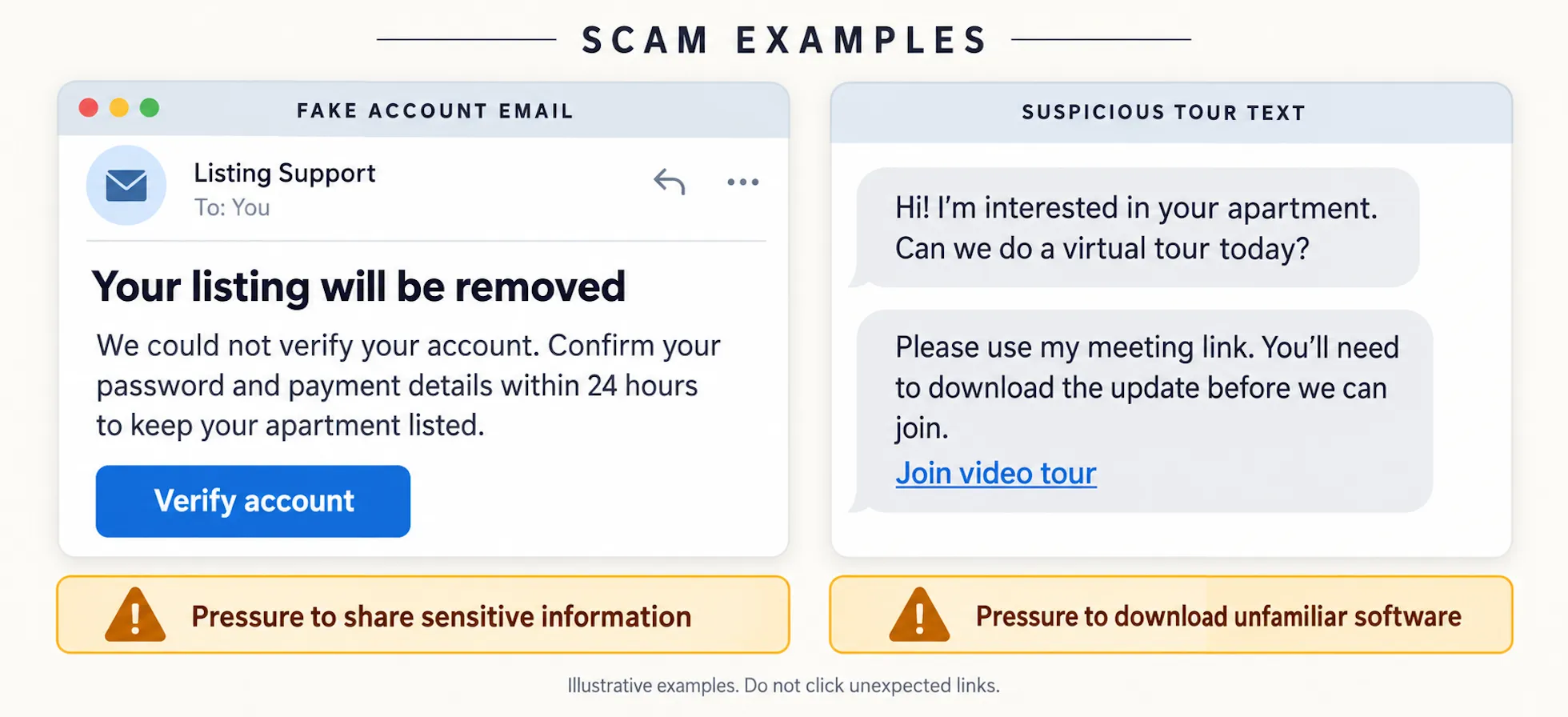
An email appears to come from a listing website, your bank, or another company you trust. It says your payment failed, your account needs verification, or your listing will be removed unless you act now.
You follow the link and arrive at a page with the right logo, familiar colors, and a form asking for your password or financial information. It looks convincing. That’s the point.
This is phishing: someone impersonating a trusted source to get sensitive information from you.
What to do: Leave the message and contact the company independently. Open the app you already use, type its known website address into your browser, or call a number from a previous statement. Don’t use the link or phone number in the message you’re trying to verify.
Don’t rely on appearances. AI makes convincing emails and fraudulent websites easier to produce. A familiar logo and perfect grammar don’t establish that a request is genuine. Checking with the company yourself is a better habit than trying to spot every possible flaw in a fake.
2. THE VIRTUAL TOUR INVITATION THAT ASKS YOU TO DOWNLOAD SOMETHING
A prospective renter reaches out about your apartment. They’re relocating or can’t attend in person, so they ask for a virtual walkthrough.
Then they send you a “Zoom” link. Before you can join, the page tells you to download software or install an update.
That download may contain harmful software that exposes passwords, emails, or other files. Illinois REALTORS has warned about a similar scheme involving people posing as buyers and insisting on supplying the meeting link.
What to do: Set up the call yourself. Open your trusted video calling app, create the meeting, and send the invitation. Don’t download an app or install an update through a link supplied by a prospective renter.
A request for a virtual tour is reasonable. The warning sign is someone insisting that you use their unfamiliar link or download before the tour can happen.
An easy reply: “Happy to arrange a video tour. I’ll set it up and send you the invitation.”
If they keep pushing you to use their link, stop the exchange.
3. YOUR APARTMENT APPEARS IN A LISTING YOU DIDN’T POST
Your photos and description are online. A scammer copies them, changes the contact information, and advertises your apartment elsewhere, sometimes at a much lower rent.
People responding to that ad think they’re talking to you. Instead, someone else is collecting money or personal information for an apartment they have no authority to rent. Scammers may copy virtual tours, too.
What to do: After publishing your listing, search the apartment’s address and check periodically while it’s available. Look for unfamiliar contact information, a different asking rent, or an ad you didn’t authorize.
If you find a fraudulent copy, save screenshots and the page address, then report it to the website hosting it. If you work with a broker or property manager, confirm whether they placed the ad before flagging it.
Give the prospects you’re actually speaking with clear instructions about scheduling a showing and who will meet them. That makes conflicting messages from someone else easier to recognize.