


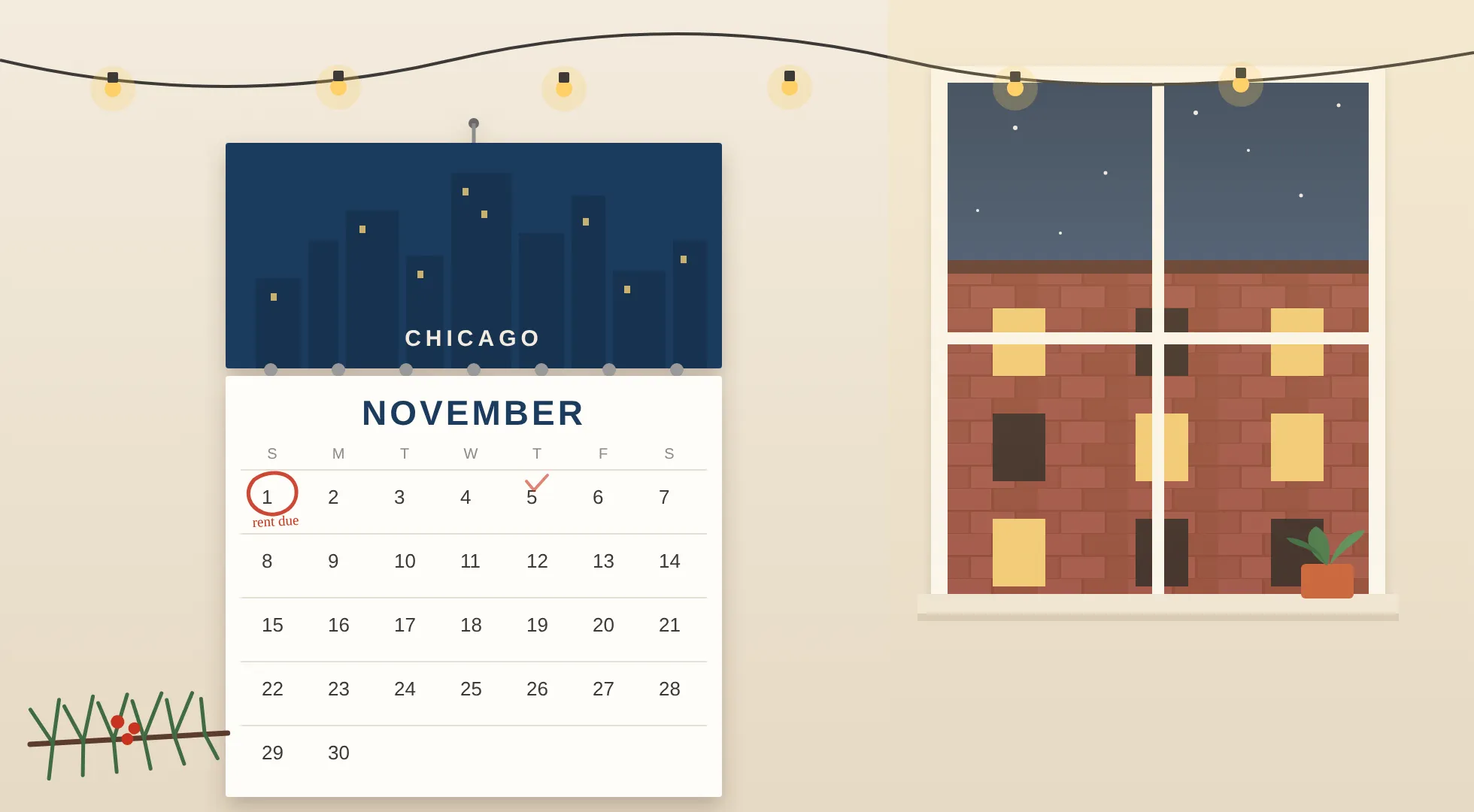
November rent is coming due, and the holiday season is right behind it. For smaller landlords, this is a good time to review how you handle rent collection. When you own a two-flat or a few apartments, one delayed payment can affect how you cover the building’s bills.
Your tenants have their own calendars, too. Paydays, travel, gifts, and other holiday expenses can put pressure on a household budget. Before the season gets busy, pull up your leases and have your payment reminder ready.
The first is not always when the payment arrives
Before you send a late-rent message on the second, open the lease.
Some leases give tenants through the fifth before a late fee applies. Others allow until the tenth. Check the exact wording in yours, including whether the listed date is included and when a fee would begin. If your lease provides that window, expect that some tenants will use it.
The date rent is due and the date a late fee becomes applicable are not necessarily the same. A lease may say rent is due on the first while allowing several days before a fee can be charged. A payment on the fourth may be later than you prefer and still arrive before your lease permits a late fee.
Allow for how the payment gets to you
November 1 falls on a Sunday this year. Depending on the payment method, money submitted that day may not appear in your bank account immediately.
Check your payment portal, pending transfers, and any confirmation the tenant provides before assuming nothing was sent. Review credits and partial payments, too. Your bank balance alone may not tell the whole story.
Holiday bank closures can also affect processing. If a tenant says they submitted payment, ask for the confirmation and check its status before sending another reminder.
Holiday expenses can create a squeeze
Gifts, family visits, meals, and travel can compete for the same dollars tenants use for their regular bills. Some households may also have changing work hours or income during the season.
Avoid assuming you know why someone is late. A holiday shopping bag is not a financial statement. Ask about the payment and keep the conversation focused on the amount owed and the expected payment date.
A brief reminder through your usual communication channel can help prevent confusion. Restate the payment method and the dates already in the lease. Include whom to contact if a payment fails or the portal is unavailable.
Once a payment needs follow-up, keep it straightforward
After checking the lease and confirming the balance, send a short written message. Identify the month, amount outstanding, and how to pay. Give the tenant a chance to flag a payment or accounting issue.
Skip the lecture about holiday spending. You need a clear answer about payment, not a breakdown of their purchases.
Here is wording you can save and use:
Hi [Name],
Our records show an outstanding rent balance of $[amount] for [month] at [address/unit].
If you have already submitted payment, please send the payment date and confirmation so I can check our records. Otherwise, please let me know when you expect to pay. You can submit payment through [payment method].
Please reply by [date] so we can confirm where things stand.
Thank you,
[Your name]
If they ask for more time, get a date
“I will catch up after the holidays” does not give you much to work with. Ask for a specific proposed date and amount.
Think beyond the immediate payment. If November rent arrives late in the month, December rent may be due a few days later. Ask how the proposed arrangement accounts for the next payment, too.
Consider your own obligations before agreeing. Put any arrangement in writing. If you have already served a formal notice, get legal guidance before changing arrangements or accepting partial payment.
Meet tenants halfway during the holiday season
If a tenant is having payment issues, consider whether you can offer an additional five days without charging a late fee. Put the one-time arrangement in writing, including the payment deadline and the condition that the fee will be waived if payment arrives by then. Specify which month it covers and avoid suggesting that future rent due dates have changed.
Document the balance, messages, promised dates, and payments received. A spreadsheet and a folder for correspondence can be enough.
For rentals covered by Chicago’s Residential Landlord and Tenant Ordinance, the monthly late-fee cap is $10 on the first $500 of monthly rent plus five percent of the amount above $500.
An ordinary reminder is different from a formal legal notice. If the agreed deadline passes without payment, seek advice about the next step.
This newsletter provides general information, not legal advice. Applicable requirements depend on your property, lease, and circumstances. Consult an attorney about fees, payment agreements, or formal notices.